1996 年
生物 · 共 60 題 · 點擊選項即時核對答案
Questions 19 to 21 refer to the diagram below which shows some of the structures in the human thoracic cavity:
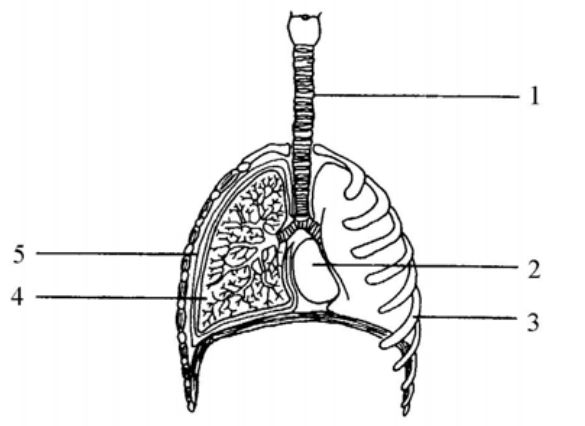
Which of the following will occur if structure 5 is broken?
Questions 22 and 23 refer to the information below: In a set-up, some living yeast cells were added to a 10% glucose solution under anaerobic conditions. The graph below shows the changes in the amount of three substances in the set-up:
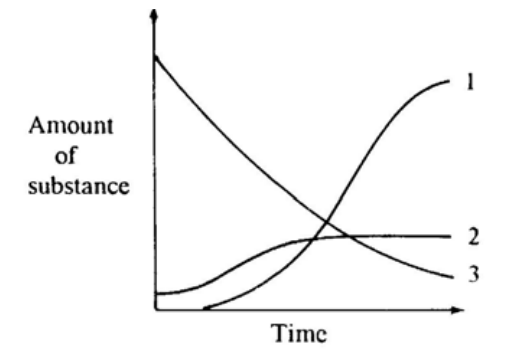
Which curves represent yeast and glucose respectively?
| Yeast | Glucose | |
|---|---|---|
| 1 | 2 | |
| 1 | 3 | |
| 2 | 3 | |
| 3 | 1 |
Questions 22 and 23 refer to the information below: In a set-up, some living yeast cells were added to a 10% glucose solution under anaerobic conditions. The graph below shows the changes in the amount of three substances in the set-up:
What products are formed in the set-up?
Questions 24 to 26 refer to the diagram below which shows the pathway of water movement from the soil into the root of a plant:
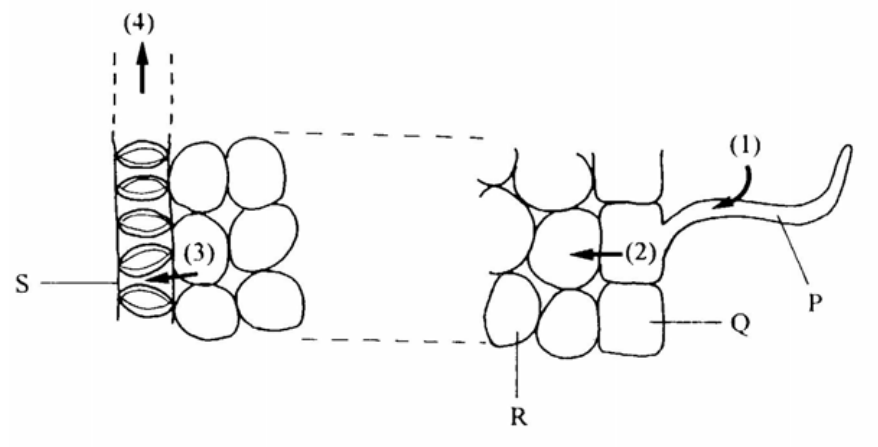
In which part(s) of the pathway does osmosis occur?
Questions 24 to 26 refer to the diagram below which shows the pathway of water movement from the soil into the root of a plant:
Food is usually stored in cell type
Questions 24 to 26 refer to the diagram below which shows the pathway of water movement from the soil into the root of a plant:
Which of the following cell types has the thickest cell wall?
The bar charts below show the relative amounts of four substances in the blood entering and leaving a certain organ in the body:
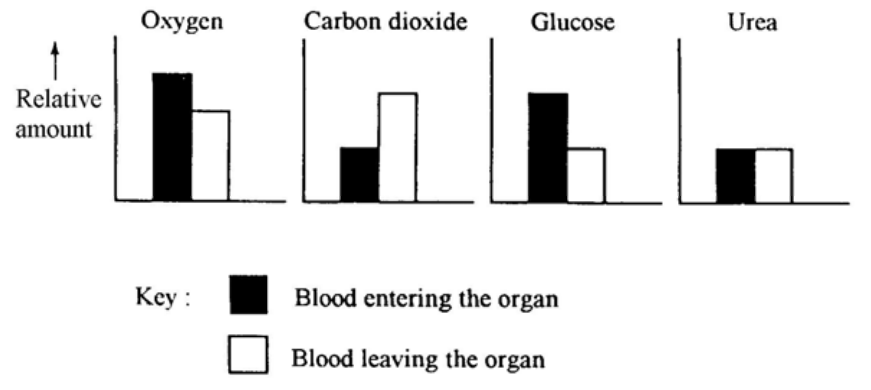
This organ is
The blood of a person takes a long time to clot. He may not have enough
A patient diagnosed to be a ‘vegetable’ shows reflex actions, normal heart beat and breathing, but no voluntary responses. Which part of the central nervous system is probably damaged?
The table below summarizes the compatibility for blood transfusion among three persons:
| Donor \ Recipient | Mary | John | David |
|---|---|---|---|
| Mary | — | × | ✓ |
| John | × | — | ✓ |
| David | × | × | — |
Key: ✓ = blood can be transfused with no ill effects × = blood should not be transfused If the blood group of Mary is A, what are the blood groups of the others?
| John | David | |
|---|---|---|
| O | A | |
| O | AB | |
| B | A | |
| B | AB |