2010 年
生物 · 共 60 題 · 點擊選項即時核對答案
The diagram below shows an experiment on transport in flowering plants.
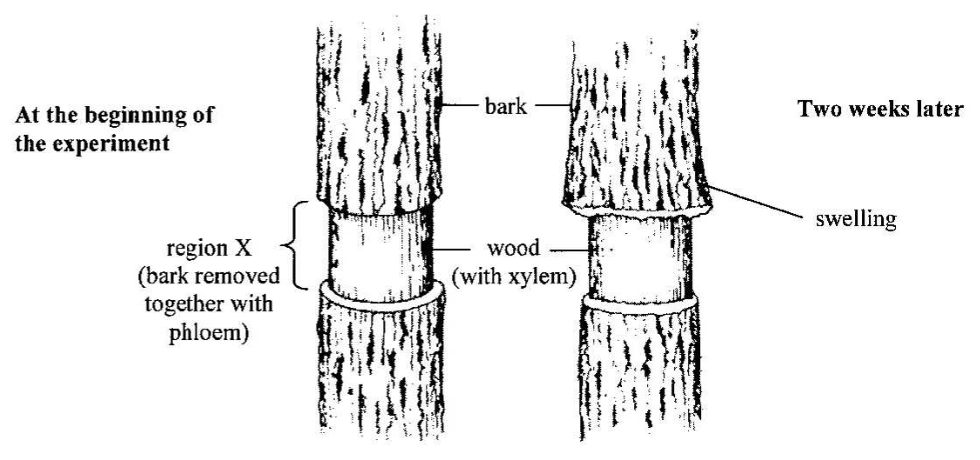
Which of the following explains the results after two weeks?
The diagram below shows a nervous pathway in the human body.
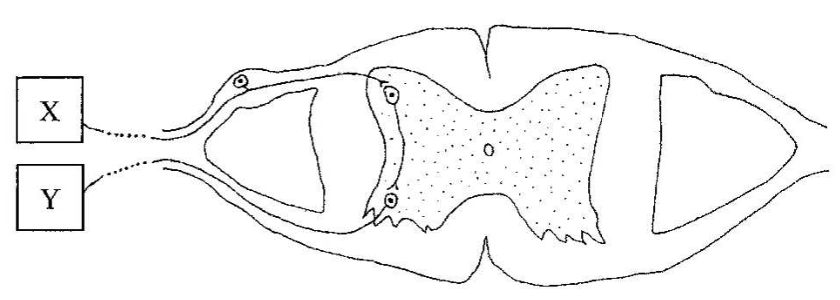
Structures X and Y are probably
| X | Y | |
|---|---|---|
| the intercostal muscles | the ribs | |
| the skin on hands | the arm muscles | |
| the pancreas | the liver | |
| the nose | the salivary glands |
The diagram below shows a section of a human brain.
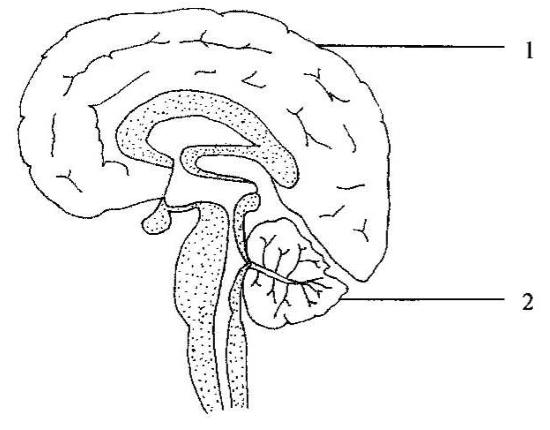
Which of the following would require the greatest activity in both structures 1 and 2?
When a person suffers from osteoporosis (a condition where bone materials are lost), his bones become
In which of the following conditions would sweat evaporate most rapidly?
Which of the following organs releases the largest amount of heat during vigorous exercise?
Questions 27 and 28 refer to the diagram below, which shows a section through the human skin:
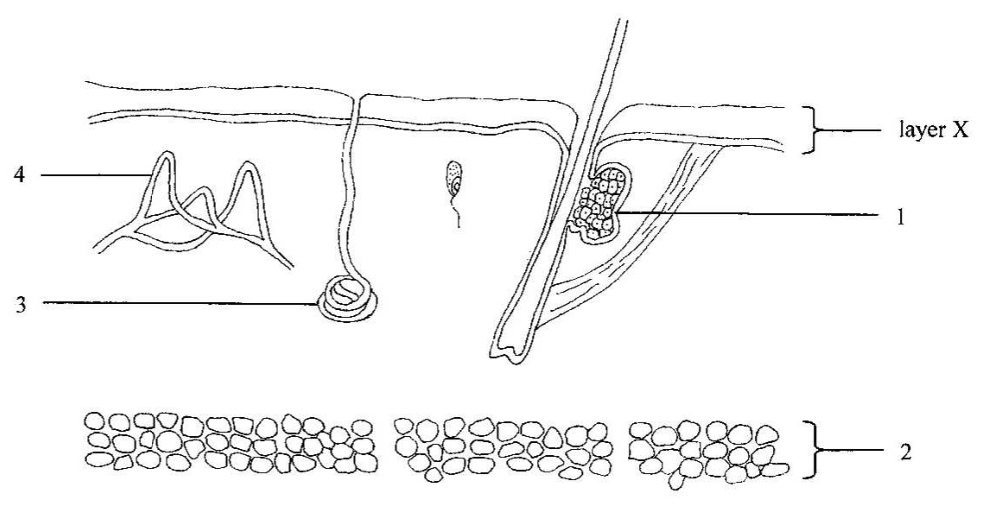
Which of the following is an important function of layer X?
Questions 27 and 28 refer to the diagram below, which shows a section through the human skin:
Which of the labelled structures contribute to temperature regulation when a person walks from a cold area to a hot area?
Which of the following comparisons between a human sperm cell and a human egg cell is correct?
| Sperm cell | Egg cell | |
|---|---|---|
| contains mitochondria | does not contain mitochondria | |
| has higher mobility | has lower mobility | |
| has more food reserves | has less food reserves | |
| contains fewer chromosomes | contains more chromosomes |
Which of the following statements about the reproductive process is correct?