2008 年
生物 · 共 58 題 · 點擊選項即時核對答案
Questions 32 and 33 refer to the following set-up used to study the anaerobic respiration of yeast.
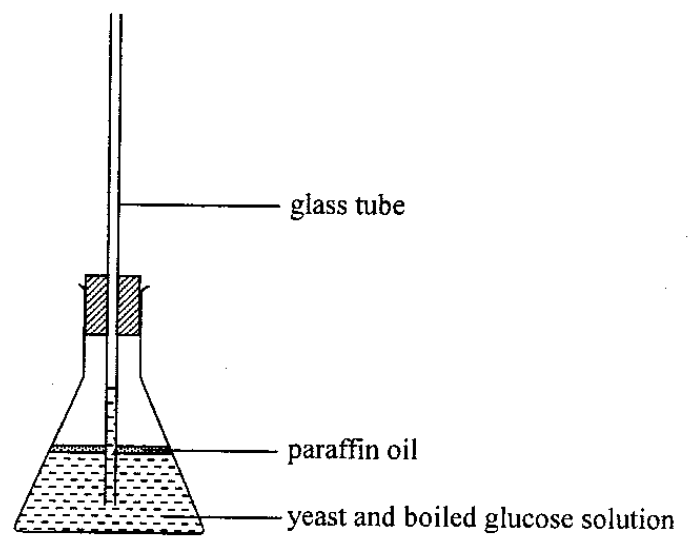
To provide an anaerobic condition, which of the following steps are necessary?
In respiration, chemical energy in the substrate is converted to heat energy, chemical energy in ATP and chemical energy in by-products. Which of the following correctly compares aerobic and anaerobic respiration?
Questions 35 and 36 refer to the graph below, which shows the results of an investigation of an enzyme reaction performed by a group of students:
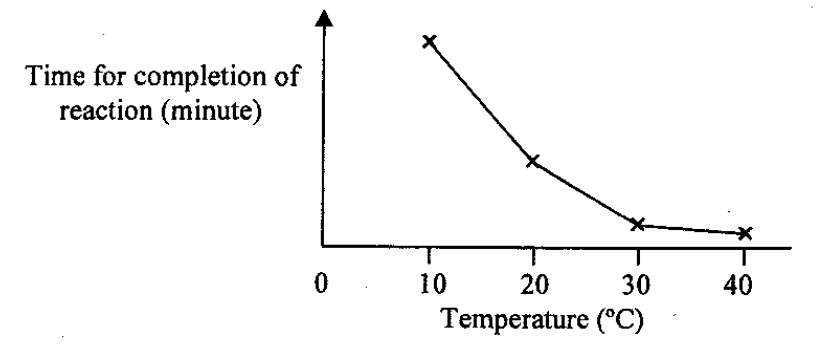
Which of the following is the correct explanation for the above results?
Questions 35 and 36 refer to the graph below, which shows the results of an investigation of an enzyme reaction performed by a group of students:
After the investigation, one of the students concluded that the optimum temperature of this enzyme is 40°C. However, another student disagreed with this conclusion. We can verify whether the conclusion is correct by repeating the experiment
Questions 37 to 39 refer to the diagram below, which shows a simplified food web of a fresh water habitat:
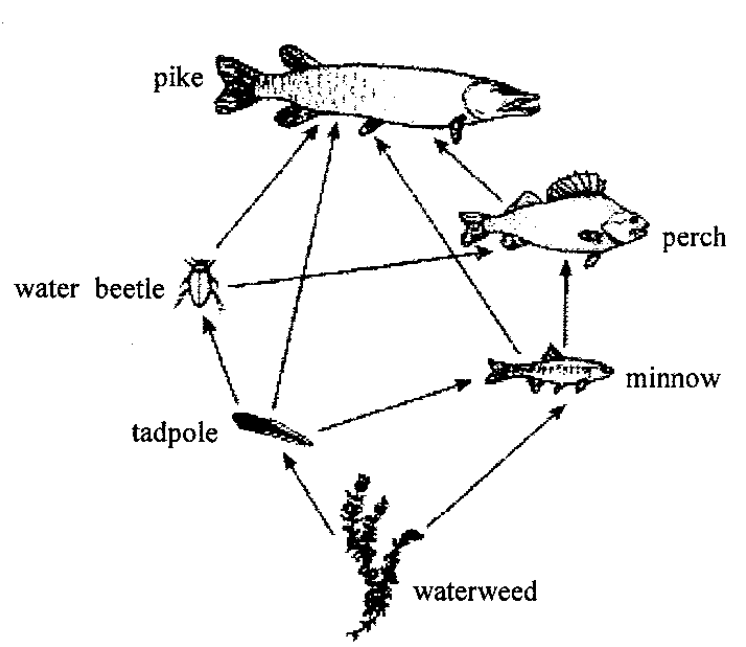
Which of the following organisms is a tertiary consumer?
Questions 37 to 39 refer to the diagram below, which shows a simplified food web of a fresh water habitat:
By referring to the relationship between tadpole and minnow, which of the following best indicates the effect of this relationship on each of them? Key: + shows that the organism benefits from the relationship – shows that the organism suffers a loss in the relationship
| Tadpole | Minnow | |
|---|---|---|
| + | + | |
| + | – | |
| – | + | |
| – | – |
Questions 37 to 39 refer to the diagram below, which shows a simplified food web of a fresh water habitat:
If the fresh water habitat is polluted by DDT (an insecticide) from nearby farmland, the pike will have the highest concentration of DDT in its body. Which of the following is related to this phenomenon?
Questions 40 and 41 refer to the diagram below, which shows an investigation carried out under daylight condition using a leaf freshly removed from a terrestrial plant:
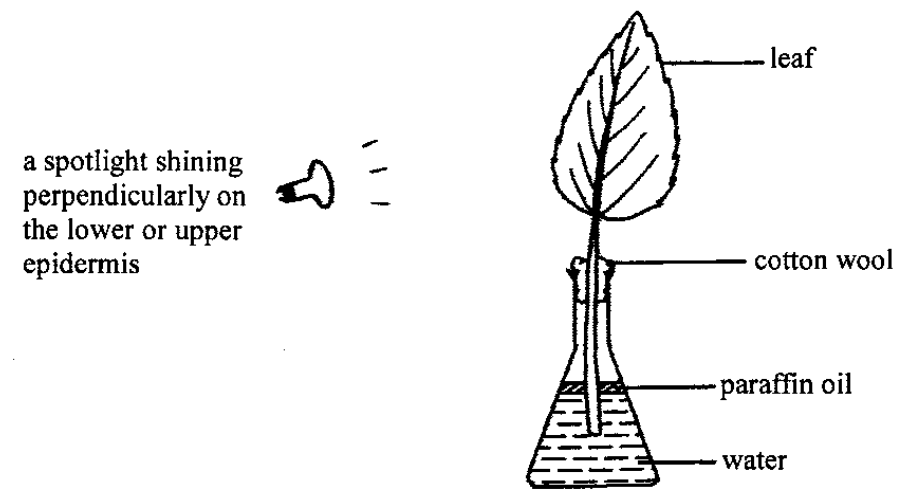
The initial mass of the set-up and its mass after one hour were measured. The results are shown in the table below:
| Treatment | Surface illuminated by spotlight | Initial mass (g) | Mass after 1 hour (g) |
|---|---|---|---|
| I | Lower epidermis | 378.0 | 375.4 |
| II | Upper epidermis | 375.2 | 374.6 |
The change in the mass of the set-up during the experiment was mainly caused by
Questions 40 and 41 refer to the diagram below, which shows an investigation carried out under daylight condition using a leaf freshly removed from a terrestrial plant:
The initial mass of the set-up and its mass after one hour were measured. The results are shown in the table below:
| Treatment | Surface illuminated by spotlight | Initial mass (g) | Mass after 1 hour (g) |
|---|---|---|---|
| I | Lower epidermis | 378.0 | 375.4 |
| II | Upper epidermis | 375.2 | 374.6 |
Which of the following account for the results of the experiment?
Natural selection acts upon