國際貿易
經濟 · 共 18 題 · 點擊選項即時核對答案
Consider a small country imposing a tariff on an import. The diagram below shows the country's supply of and demand for the good.
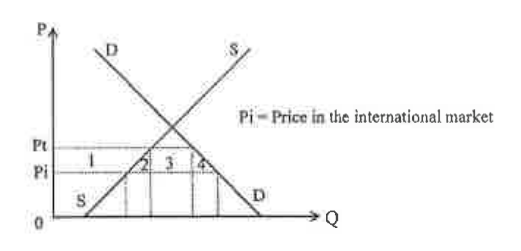
If the tariff raises the domestic price of good from Pi to Pt, then
Which of the following is NOT a result of the imposition of quotas on imports?
The unit cost of production of garments and Discmans in Hong Kong and Japan are as follows:
| Garments | Discmans | |
|---|---|---|
| Hong Kong | $200 | $2 000 |
| Japan | ¥10 000 | ¥50 000 |
Which of the following are true?
The unit cost of producing cars and computers in the U.K. and Country A are given below:
| Cars | Computers | |
|---|---|---|
| U.K. | £280 | £70 |
| Country A | $450 | $150 |
Which of the following statement(s) is/are correct?
Which of the following is NOT the effect of imposing tariffs?
Tariffs protect ______________.
Refer to the following table which shows the costs of production of two goods in two countries:
| TV Sets | Cars | |
|---|---|---|
| Japan | ¥80 | ¥160 |
| USA | $10 | $30 |
Which of the following are true?
The major difference between a quota and a tariff on imports lies in their effects on