物態變化
物理 · 共 52 題 · 點擊選項即時核對答案
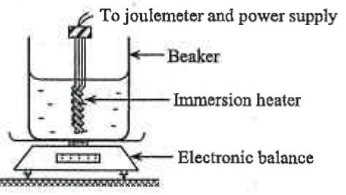
Questions 22 and 23 : The following apparatus is used to find the specific latent heat of vaporization of a liquid.
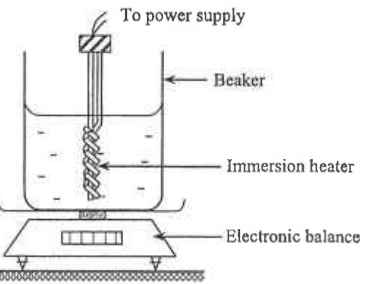
When the liquid boils, the reading of the balance is taken. After s, the reading of the balance decreases by kg. The power output of the heater is W. If of the energy supplied is lost to the surroundings, find the specific latent heat of vaporization of the liquid.
Questions 22 and 23 : The following apparatus is used to find the specific latent heat of vaporization of a liquid.
Which of the following can improve the accuracy of the experiment ?
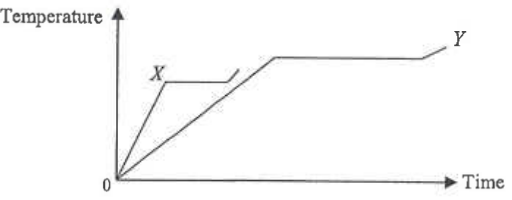
Two solids and of equal mass are separately heated by two identical heaters. The above figure shows the variation of the temperatures of the substances with time. Which of the following statements is/are correct ?
Which of the following substances is a liquid at room temperature (about ) ?
| Substance | Melting point / C | Boiling point / C | |
|---|---|---|---|
| 25 | 444 | ||
| 357 | |||
| 44 | 280 | ||
The melting point of copper is and its specific latent heat of fusion is . How much energy is needed to melt kg of copper at its melting point ?
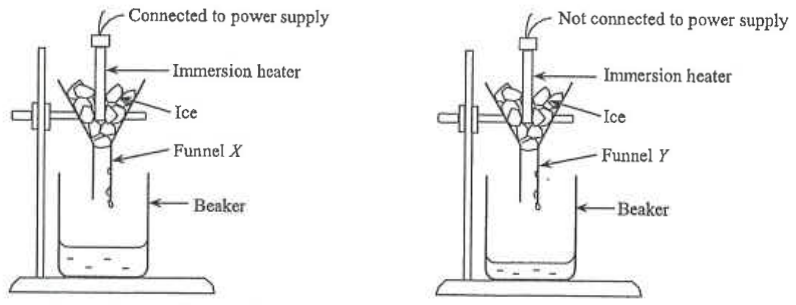
The above apparatus is used to find the specific latent heat of fusion of ice. Which of the following is an essential precaution to ensure an accurate result ?
An immersion heater is used to heat a cup of water. It takes minutes to bring the water from to its boiling point . Find the time taken for the heater to vaporize the boiling water completely. (Given : specific heat capacity of water specific latent heat of vaporization of water .)
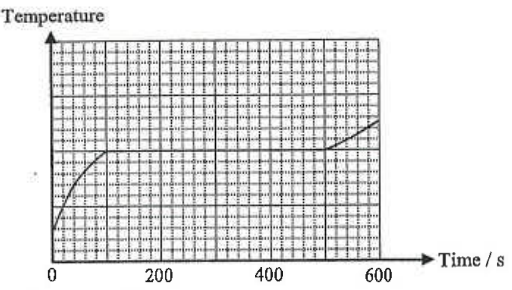
A W electric heater is used to heat kg of a solid. The graph shows the temperature against time of the substance. The specific latent heat of fusion of the substance is
The apparatus shown is used to find the specific latent heat of vaporization of water. Which of the following is NOT correct ?
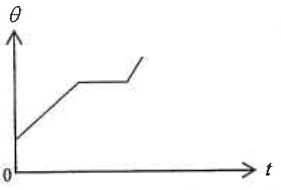
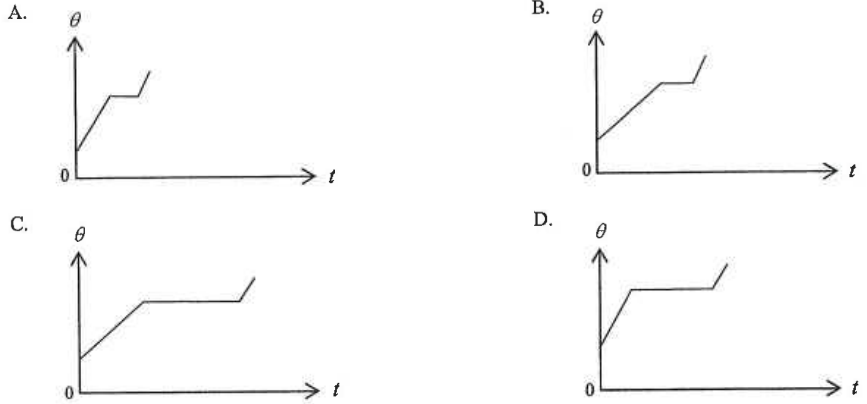
A W heater is used to melt a solid. A graph of temperature against time is plotted as shown above. If a heater of W is used, which graph (using the same scale) would be obtained ?