1999 年
生物 · 共 59 題 · 點擊選項即時核對答案
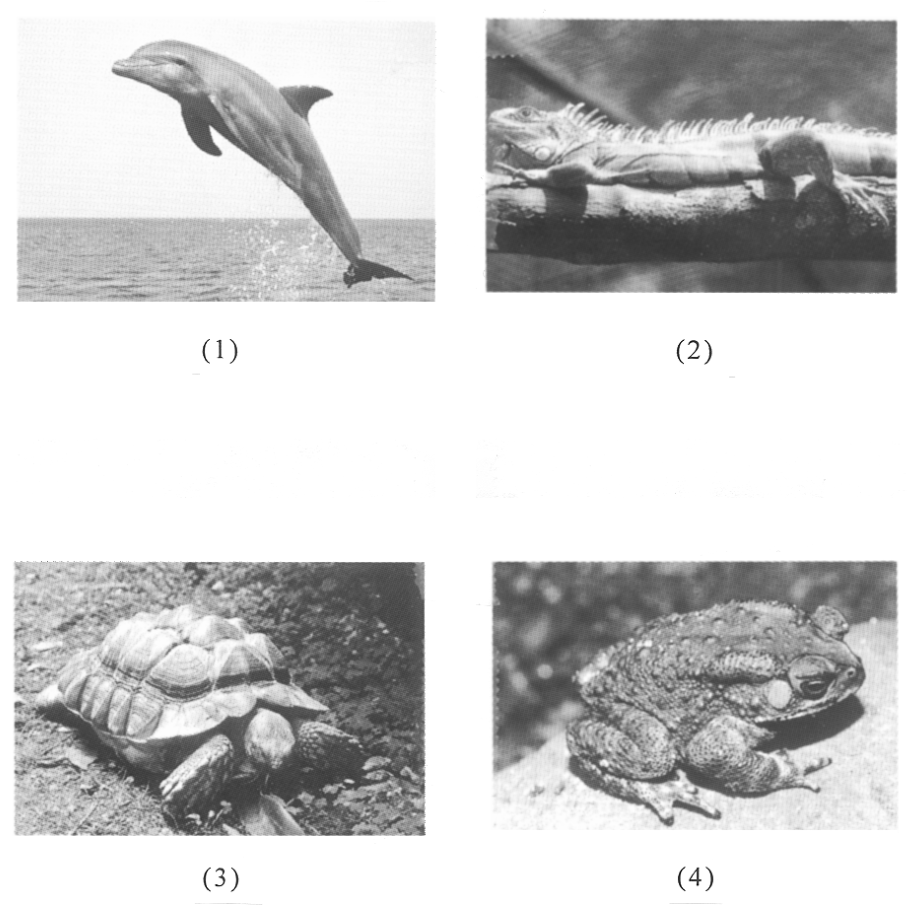
Which of the following animals have scales covering the skin ?
The dichotomous key below lists some features of four different plants P, Q, R and S : 1a with flowers ……… P 1b without flowers ……… 2 2a with seeds ……… Q 2b without seeds ……… 3 3a with roots ……… R 3b without roots ……… S Which of the four plants is a gymnosperm ?
Which of the following correctly describes the plant in the diagram below ?
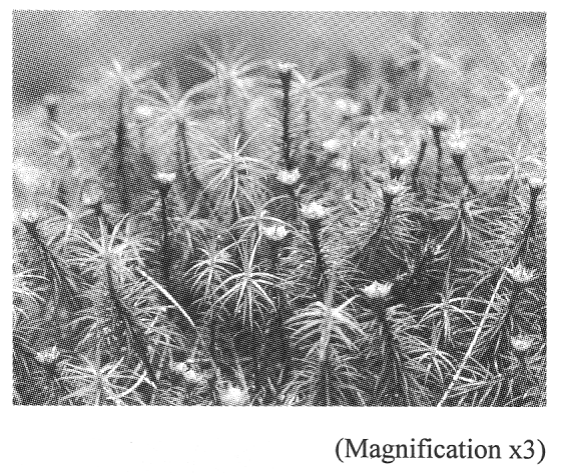
(Magnification ×3)
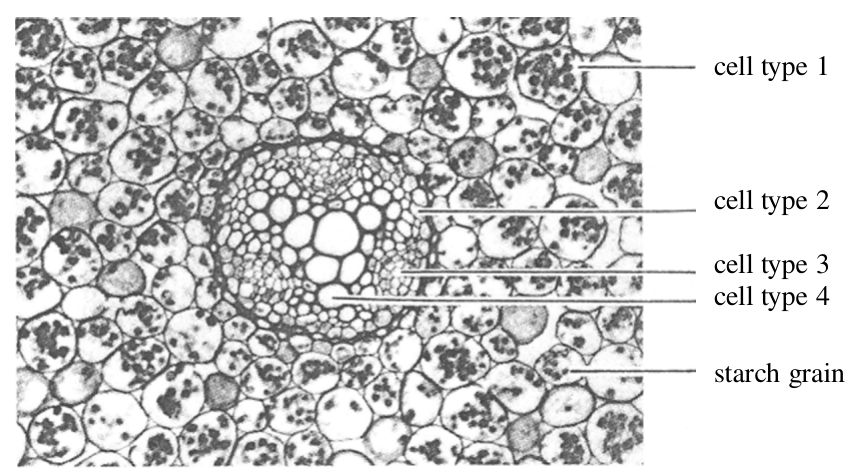
Directions : Questions 4 and 5 refer to the photomicrograph below, which shows part of a section of a young root :
Which type of cells cannot break down food to release energy ?
Directions : Questions 4 and 5 refer to the photomicrograph below, which shows part of a section of a young root :
Which of the following correctly states the functions of cell types 1 and 4 ?
| Cell type 1 | Cell type 4 | |
|---|---|---|
| photosynthesis | food transport | |
| photosynthesis | water transport | |
| food storage | food transport | |
| food storage | water transport |
Directions : Questions 6 and 7 refer to the photomicrograph below, which shows a section of the mammalian skin :
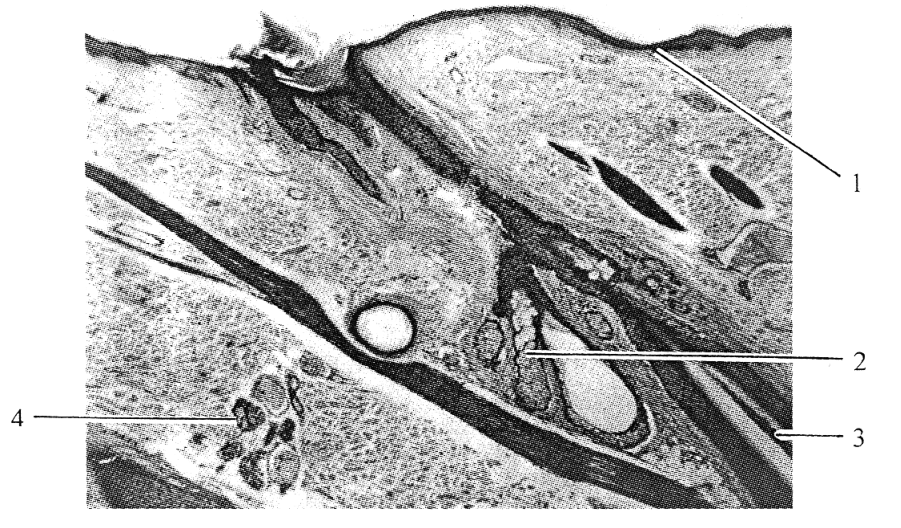
Which structure produces a secretion that can reduce evaporation of water from the skin surface ?
Directions : Questions 6 and 7 refer to the photomicrograph below, which shows a section of the mammalian skin :
Which structure contains cells capable of rapid cell division ?
Directions : Questions 8 and 9 refer to the diagram below, which shows the initial condition of two set-ups :
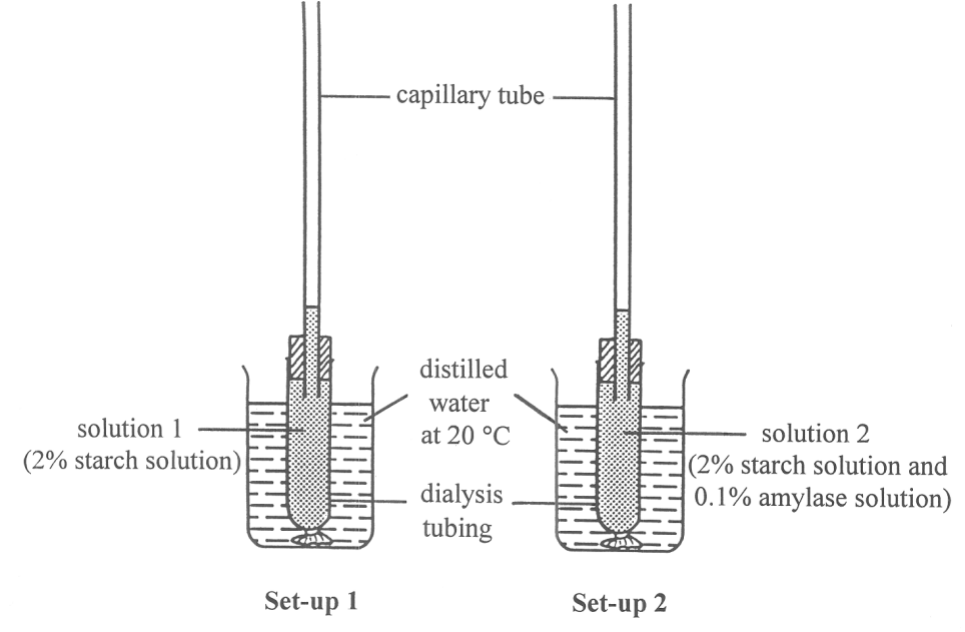
After 1 hour, the liquid level in the capillary tube of set-up 2 is much higher than that of set-up 1. Which of the following is a probable reason for this result ?
Directions : Questions 8 and 9 refer to the diagram below, which shows the initial condition of two set-ups :
Which of the following treatments might increase the rate of rise of the liquid level in set-up 2 ?
Directions : Questions 10 and 11 refer to the following diagram of a set-up used to estimate the energy value of two types of food :
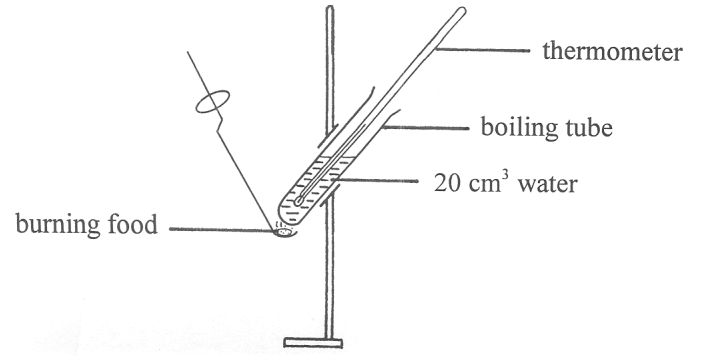
| Type of food | Mass of food used (g) | Initial water temperature (°C) | Final water temperature (°C) |
|---|---|---|---|
| Sugar | 3 | 20 | 60 |
| X | 2 | 20 | 73 |
Food X is most likely to be