2007 年
生物 · 共 59 題 · 點擊選項即時核對答案
Which of the following correctly compares a leaf epidermal cell and a root hair cell of a flowering plant?
| Leaf epidermal cell | Root hair cell | |
|---|---|---|
| with cuticle | without cuticle | |
| with chloroplast | without chloroplast | |
| without vacuole | with vacuole | |
| without mitochondria | with mitochondria |
Which of the following features enables a plant to survive successfully in a shady environment?
Which of the following correctly describe photosynthesis?
Which of the following energy sources is non-renewable?
Which of the following ways of using the vegetation from the same piece of land provides the greatest amount of energy to human beings?
Which of the following features is common to dogs, ducks and dolphins?
Questions 7 and 8 refer to the following experiment: Two boiling tubes containing 5 cm³ of hydrogen peroxide solution and 1 cm³ of catalase solution respectively were kept at 25°C for 10 minutes. The contents of the two tubes were then mixed and maintained at the same temperature, and the amount of oxygen released was recorded for 5 minutes. The results are shown in the graph below:
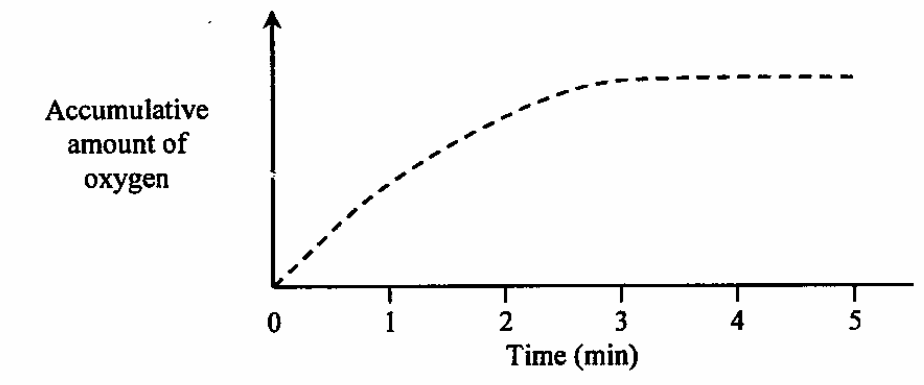
The line levels off at the 3ʳᵈ minute. Which of the following is a correct explanation for this?
Questions 7 and 8 refer to the following experiment: Two boiling tubes containing 5 cm³ of hydrogen peroxide solution and 1 cm³ of catalase solution respectively were kept at 25°C for 10 minutes. The contents of the two tubes were then mixed and maintained at the same temperature, and the amount of oxygen released was recorded for 5 minutes. The results are shown in the graph below:
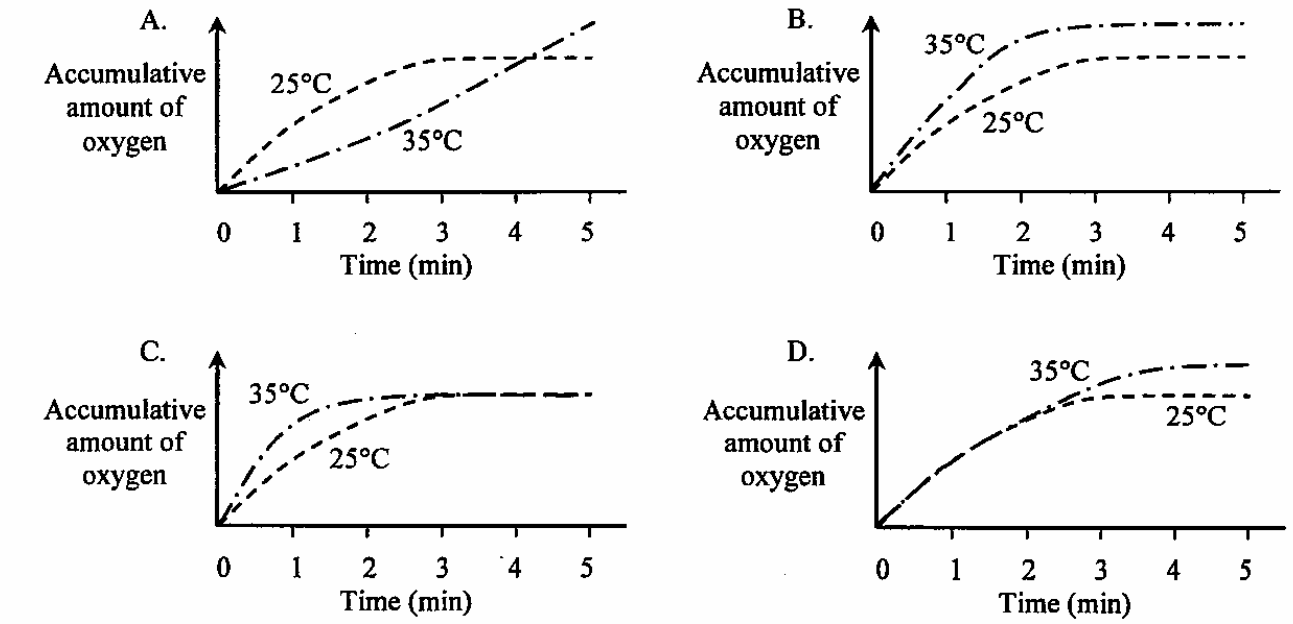
The same experiment was repeated but the contents were kept at 35°C. Which of the following would best indicate the results of this experiment?
Which of the following structures is supported by cartilage?
Questions 10 and 11 refer to the photomicrographs below, which show a stained human blood smear under different magnifications:
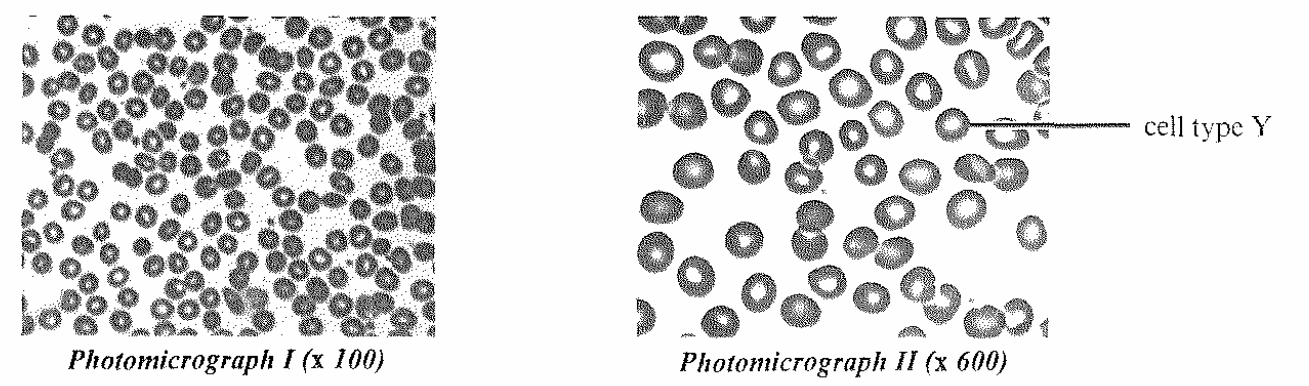
A student first focused on the blood smear under the microscope and obtained an image as shown in photomicrograph I. In order to obtain an image as shown in photomicrograph II, which of the following steps are necessary?